Beyond the Podium: 10 Lessons from Two Years in the Project Proclaim Preaching Cohort

This month marks a significant milestone on my path to ministry: the completion of my second year in Project Proclaim, a bold preaching initiative of the Southern New England Conference of the United Church of Christ (SNEUCC), funded by the Lilly Endowment and hosted in partnership with PATHWAYS Theological Education.

Looking back, this two-year commitment has been nothing short of transformative. Aside from the incredibly generous opportunities I’ve received to step into the pulpit and preach at First Church Phoenix - which have been foundational to my growth and for which I am endlessly grateful - Project Proclaim has been the crucible where my call to ministry was refined, tested, and deeply nurtured.
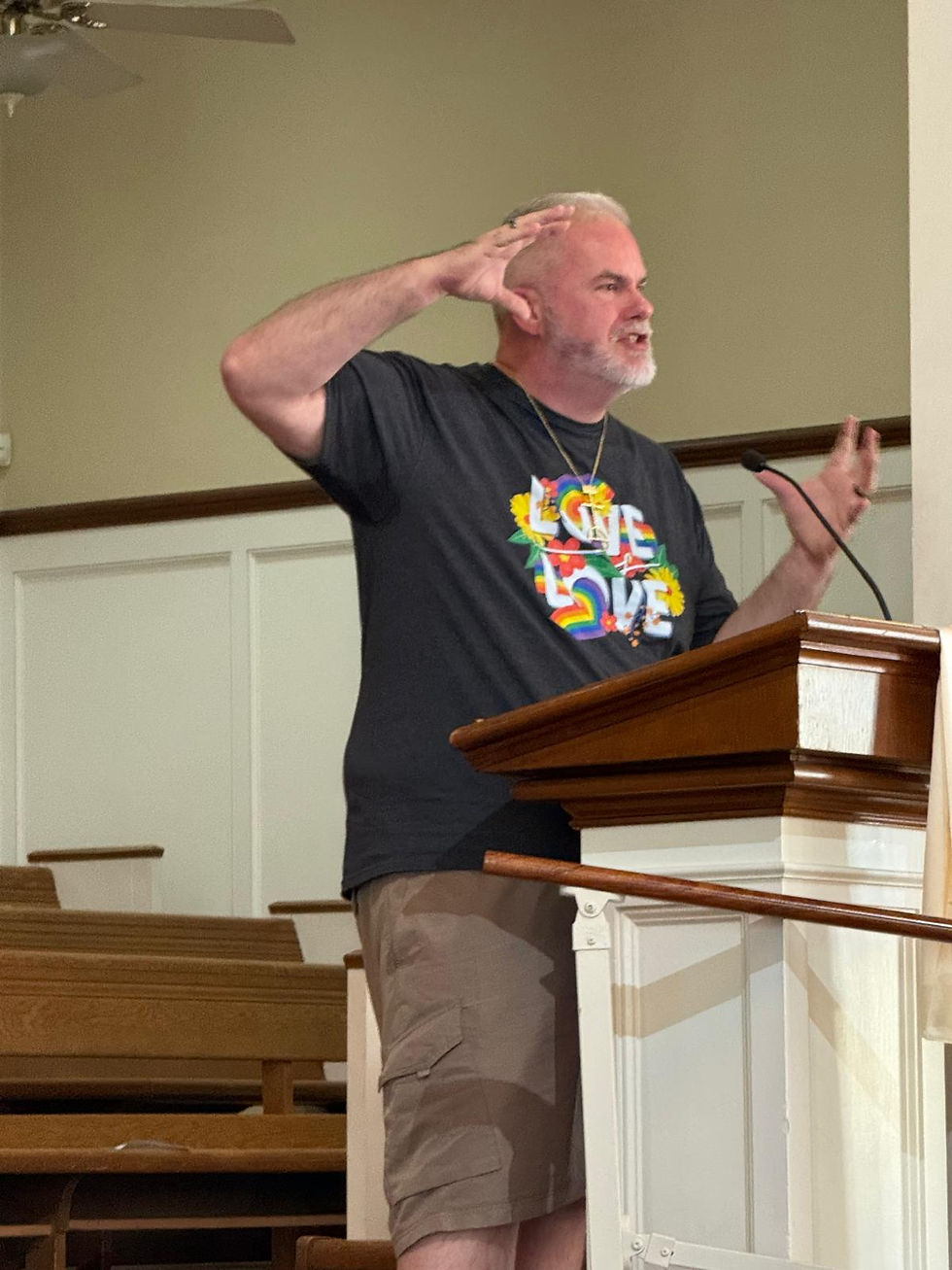
I have always had a natural gift for public speaking. Since high school, put me in front of a crowd, and I feel at home. But as I quickly learned, public speaking and preaching in a church context are two entirely different arts. Preaching is not a secular performance; it is a sacred act of proclamation. It requires a profound responsibility to the text, a deep vulnerability before the community, and a willingness to let the Holy Spirit do the heavy lifting.
Through rigorous coursework, workshops, and - most importantly - consistently listening to and evaluating the diverse preaching styles of my cohort members, my understanding of this art form has completely evolved.
Here are 10 key insights I’ve carried away from my two years with Project Proclaim:
1. Public Speaking Commands an Audience; Preaching Creates a Congregation
In public speaking, the goal is often to persuade, inform, or entertain from a position of authority. In preaching, the pulpit is not a stage, and the congregation is not an audience. Preaching is a communal event where the preacher acts as a facilitator of a divine encounter. It’s not about looking polished; it’s about creating a sacred space where people can hear the still, small voice of God.
2. Scripture is a Living Text, Not a Proof-Text
Having a natural gift for words can make it tempting to use scripture simply to back up a well-written speech. Project Proclaim drilled home the vital importance of responsible hermeneutics and exegesis. Using scripture "correctly" means wrestling with its historical context, literary genre, and theological tensions, rather than forcing the text to fit a pre-packaged moral of the story.
3. Storytelling is the Architecture of Truth
Our cohort learned that stories are not just illustrative fluff we add to a sermon to keep people awake. They are the very structure of how humans process truth. Jesus didn’t lecture; he told parables. Learning how to build narrative tension, use sensory details, and show rather than tell has transformed how I communicate the Gospel.
4. Vulnerability is the Preacher's Best Hermeneutical Tool
People do not connect with a preacher who has all the answers; they connect with a preacher who is willing to stand in the questions with them. The cohort taught me that sharing my own struggles, doubts, and human moments (responsibly, and without making the sermon "all about me") builds a bridge of trust that allows the congregation to enter into the text more deeply.
5. There is No "One Way" to Preach the Good News
One of the greatest gifts of the two-year cohort model was the sheer diversity of our members. Every month, I heard sermons delivered with radically different tempos, theological emphases, cultural idioms, and storytelling techniques. I realized that my own voice doesn't need to mimic a classic "pulpit style." Authentic proclamation comes in infinite varieties. If my style is more “corporate/TED Talk/educator” than fiery evangelical preacher, that’s fine.
6. Prophetic Preaching Requires Pastoral Care
In an age of deep political and cultural division, learning how to preach on heavy topics - from social justice and liberation theology to Christian nationalism - is incredibly difficult. Project Proclaim taught me that prophetic preaching is not about yelling at people; it is about standing with them, using scripture to offer a vision of God's alternative reality (the Kin-dom) while holding the congregation's hearts in love.
7. Silence is as Powerful as the Spoken Word
As someone who speaks easily, I used to fear dead air. Our cohort work taught me the profound homiletical value of the pause. Allowing a difficult question, a beautiful image, or a moment of scripture to sit in silence gives the Holy Spirit room to breathe and do the work of translation in the hearts of the listeners.
8. Local Context Changes Everything (The "Phoenix" Lesson)
The academic and cohort spaces of Project Proclaim provided the theory, but my opportunities at First Church Phoenix provided the lived practice. I learned that a sermon is never preached in a vacuum. It must be deeply contextualized to the specific hopes, griefs, and culture of the community sitting in the pews in front of you on any given Sunday. I learned that the cultural contexts of many of my fellow cohort members are very different than my own at First Church Phoenix, and was reminded that I me that I will always need to adapt to the congregation with whom I enter into covenant. Diversity is both the beauty and the challenge of the UCC and of God's world.
9. Your Body is Part of the Proclamation
Preaching is an embodied act. Our tone, our posture, our eye contact, and even how we breathe transmit theological meaning. Project Proclaim pushed me to get out of my head (and away from being overly dependent on a manuscript) to ensure that my physical presence and use of voice match the warmth and urgency of the message.
10. Homiletics is a Lifelong Spiritual Discipline
If these two years have taught me anything, it’s that a preacher is never "finished" learning. Preaching is a spiritual discipline that requires continuous reading, prayer, critique, and community. The completion of this cohort is not the end of my education, but the launching pad for a lifetime of listening to God and listening to the world.
Looking Ahead
I am leaving this cohort with a deeper love for the Word, a more critical and careful eye toward scripture, a rich toolbox of storytelling techniques, and a community of colleagues I will treasure for the rest of my ministry.
To my Project Proclaim cohort, our facilitators, and the saints at First Church Phoenix: thank you for helping me find my voice, refine my craft, and step more confidently into this sacred calling. The journey is just beginning! I might even sign up again for Year 3!


Comments