Liturgical Polyglossia: An Analysis of Cathedral of Hope's Three Worship Styles with a Common Heart

The feast of Pentecost is the Church’s primordial celebration of polyglossia - the divine shattering of a monolithic, "imperial" language in favor of a Spirit-led diversity that speaks directly to the "heart-languages" of the marginalized. On May 24, 2026, Cathedral in Dallas offered a profound contemporary enactment of this ancient narrative. Through three distinct worship movements, Cathedral demonstrated how a singular, progressive theology of radical inclusion can be translated across diverse liturgical aesthetics to heal specific ecclesiastical traumas.
The Theological Spine: Radical Inclusion as Hermeneutic
Before examining the divergent aesthetics, one must acknowledge the unified theological framework that tethers these services together. Across all contexts, Cathedral operates from a robust ecclesiology of Radical Inclusion. This is not merely a social stance but a core theological hermeneutic.
On Pentecost Sunday, this was manifested in the "Open Table" theology of the Eucharist. In an era where many traditions utilize the sacraments as a boundary marker for orthodoxy or membership, Cathedral explicitly defines the elements of grape and grain as a "sustaining spirit of God’s love for all," available regardless of confession, membership, or "status." This "open table" serves as a literal and metaphorical rejection of religious nationalism and fear, replacing it with a mandate for peacemaking and the embrace of those existing on the margins of society. This theology is practiced visibly as the community prepares for Pride Month, embodying the "Love is Love" (Amor es amor) ethos not just as a slogan, but as a sacramental reality.
The Traditional Anchor: Healing the Liturgical Exile (8:30 am & 10:00 am)
The morning begins with two identical services at 8:30 am and 10:00 am. These services represent the formal liturgical anchor of Cathedral, deeply fed by Rev. Dr. Neil Thomas’s Episcopalian roots and the historical witness of the Metropolitan Community Churches (MCC).

The aesthetic here is one of structured reverence: choral anthems, classical hymnody, and formal liturgical greetings. However, the creative genius of these services lies in their demographic resonance. This "high-church" environment is a sanctuary for those who have spent their lives in Catholic or Mainline Protestant environments - traditions that may offer beauty but often lack the radical openness of the United Church of Christ.
For the refugee from a non-affirming Catholic or traditional Mainline background, the liturgy provides a "sacred scaffolding." They are not looking for a rejection of tradition; they are looking for a tradition that finally accepts them. The "smells and bells" and the rhythmic pacing of the service feel inherently holy, yet the exclusionary dogma that once defined their spiritual lives has been stripped away. In this space, the Holy Spirit is characterized as the Advocate. Rev. Dr. Thomas utilizes the metaphor of Jesus commanding the disciples to "fish on the other side of the boat" as a prophetic institutional challenge. It is a call for those who have found safety in tradition to now use that tradition as a vehicle for progressive vision and collective justice.
The Contemporary Pulse: Victory in the Valley (11:45 am)
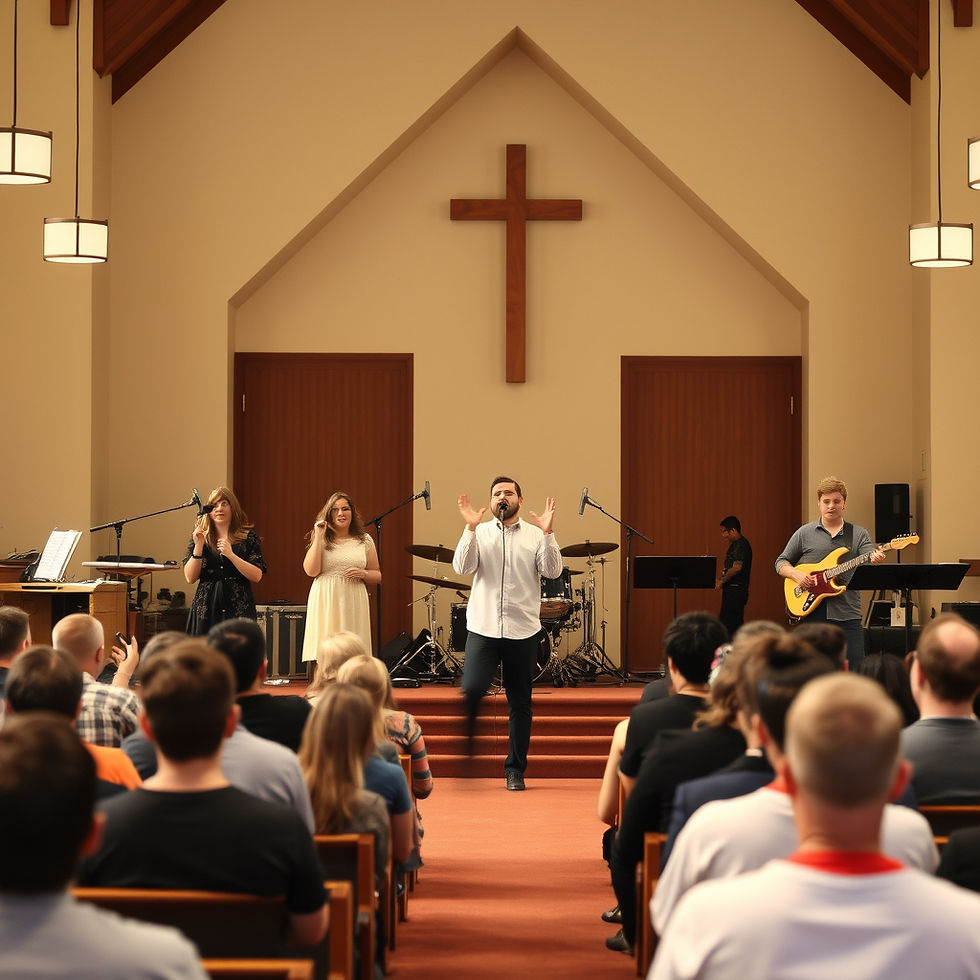
As the clock turns toward noon, the aesthetic of Cathedral shifts dramatically from the choral to the charismatic-modern. The 11:45 am service is designed for a demographic often formed in Evangelical or non-denominational environments. Here, the "cultural ghost" being addressed is the fear of inadequacy and the trauma of "spiritual warfare."

The music is band-driven, emotive, and repetitive—a liturgical strategy designed to move the participant from the head to the heart. In this context, the Holy Spirit is the Victor. The lyrics focus on personal spiritual empowerment: "The mighty power of Jesus is fighting for me here." While "warfare" language can be problematic in conservative hands, Cathedral subverts it. For the queer person or the seeker who has been told they are "lost," this language of victory becomes a tool for personal resilience. It is a theology of emotional intimacy with God, providing the "divine armor" necessary to navigate a world that often remains hostile to their existence.
Pentecostés: The Lion’s Roar and Liberation (1:30 pm)
The final movement of the day is the Spanish service, led by Pastor Salvador Sotelo. This service is a masterclass in Liberation Theology tailored for lifelong Catholics seeking a more affirming environment.

Pastor Sotelo’s sermon contextualizes the Pentecost narrative through the lens of lived trauma. The fear of the early Apostles is explicitly linked to the modern fear experienced by undocumented immigrants (estatus migratorio) and sexual minorities. In this space, the Holy Spirit is the Empowerer of the Voiceless.
The worship style is exuberant and visceral, peaking with the charismatic praise song "Rugido del león" (The Lion’s Roar). As the congregation chants "fuego, fuego" (fire, fire), they are not just performing a ritual; they are enacting a spiritual liberation. For a lifelong Catholic who has been taught that their very being is "intrinsically disordered," this "fire" represents the burning away of shame. It is a celebration of inherent worth that is both physically energetic and politically potent.
The Echo of the MCC: The Priesthood of the Lay Minister
While Cathedral formally left the Metropolitan Community Churches over twenty years ago, the "genetic markers" of the MCC remain visible in the most intimate moment of each service: the administration of Communion.
In a departure from the rigid clericalism found in many traditional environments, Cathedral utilizes Lay Ministers of Worship to administer the elements after they are consecrated by ordained clergy. This is a direct echo of the MCC’s commitment to the "priesthood of all believers." These ministers do not simply hand out bread and juice; they engage in the laying on of hands and personal prayer for every individual, couple, family or group of friends.
This practice is perhaps the most effective tool for healing religious trauma within the life of Cathedral. To have a peer- not an unreachable prelate - place a hand on one’s shoulder and offer a personalized blessing is a radical act of spiritual reclamation. It reinforces the "Open Table" theology by making the grace of God tangible, personal, and decentralized.
Conclusion: A Shared Humanity of Faith
Ultimately, the varied aesthetics of Cathedral serve a singular, profound purpose. Whether one is drawn to the choral and orchestral majesty of the morning, the emotive pulse of the midday, or the charismatic Latin fire of the afternoon, the underlying hunger is the same.
Every person entering these doors - regardless of whether they come from a high-church Catholic background, a traditional Mainline pew, or an Evangelical tent - is seeking to be affirmed as a human being of faith. They are looking for a community where their identity is not a barrier to the Divine, but a vessel for it. Beyond the music and the liturgy, they seek social connection and a platform to do good for the wider community.
Cathedral achieves a true Pentecostal unity: a "one-ness" that is not found in uniformity, but in the radical insistence that every tradition and every identity is a holy vessel. By honoring these distinct needs, Cathedral becomes more than a house of worship; it becomes a site of collective healing and a catalyst for social good in a world that deeply needs the "Language of the Spirit."


Comments