Sermon: The Irascisble Hope of Caring for the Least of These


Date: March 8, 2026 (Fourth Sunday in Lent)
Location: First Church Phoenix UCC
Scripture: Matthew 19:13 - 15; Proverbs 31:8
I. The Coffee Shop Covenant: An Instinctive Love
As we gather on this Fourth Sunday in Lent, we find ourselves at a crossroads of the heart. Our Lenten journey can often feel like an internal, somber trek toward the crucifixion. But this Fourth Sunday is traditionally called Laetare Sunday - coming from the Latin word for "rejoice." It marks a midpoint where the tone shifts briefly from penitence to hope.
But what kind of hope are we rejoicing in? In our progressive tradition, hope is never a passive sentiment or a "wish upon a star." It is a theological virtue that gives us the strength to do what is right. St. Thomas Aquinas taught that hope lives in what he called the irascible appetite - the part of our nature that "fights" for what is good. For Aquinas, hope is not a soft feeling; it is the "stretching out" of the soul toward a future that seems difficult but is possible through God.
This "stretching out" is not just a mental exercise; it is a physical and spiritual reflex. It is the energy that moves us to protect the vulnerable before we even have time to think about it.
We see this reflex perfectly captured in a poem by the Rev. Sarah Speed from our Lenten study series entitled Unwritten Agreement. She describes a beautifully ordinary scene in a coffee shop: "When the toddler at the coffee shop runs round the corner, when her mom, at the register, looks up in panic, we, the adults in the room, will pledge, with quick smiles and silent head nods, to keep watch."
When that child wanders, we lean out of our seats. We put down our phones. In that split second, we are not just being "nice" - we are exercising that irascible hope. Our souls are stretching out to bridge the gap between a child's wandering and a child's safety. This is the "Good News" of today’s Gospel: that the stretching of the soul is a public practice of protection, and as Speed concludes, "love always includes the least of these."
II. The Illusion of Control: Bodyguards for the Divine
In Matthew’s beautiful account of Jesus and the children, we encounter a scene that is anything but "holy" in the traditional sense. It is disorderly. It is loud. Imagine toddlers wailing, kids squirming through the crowd to get a look at the famous Teacher.
The disciples try to preserve a sense of reverence. They attempt to act as bodyguards for Jesus, pushing away the children as an "invasive distraction" to their sacred agenda. They cling to an "illusion of control." But Jesus issues a startling rebuke. He does not rebuke the messy children; he rebukes his dull disciples.
To understand why the disciples reacted this way, we have to recognize the social position of children in the first century. They were not the center of the family universe as they often are today. In the ancient Greco - Roman and Jewish world, children occupied the lowest rung of the social ladder. They were essentially "nobodies" - possessing no legal rights, no social standing, and no honor to offer a Teacher like Jesus. In a society built on status, children were a drain on resources and a distraction from "serious" work. They were seen as "potential" people, but until they reached maturity, they were often regarded as little more than property. By shooing them away, the disciples were simply following the cultural script of their time: protect the important adults from the unimportant children.
I wonder, what are the cultural scripts we are following today that tell us who is "too messy" or "too loud" to have a seat at the table of God?
Jesus flips that script entirely and challenges the marginalizing of the “least of them.” He insists that the people our society often ignores or looks down upon are the very ones who are at the heart of God’s kin - dom. He calls for a hope that "stretches out" beyond our comfort zones to welcome the "nobodies" of the world.
III. Disciples NOW: The Theology of the Prayground
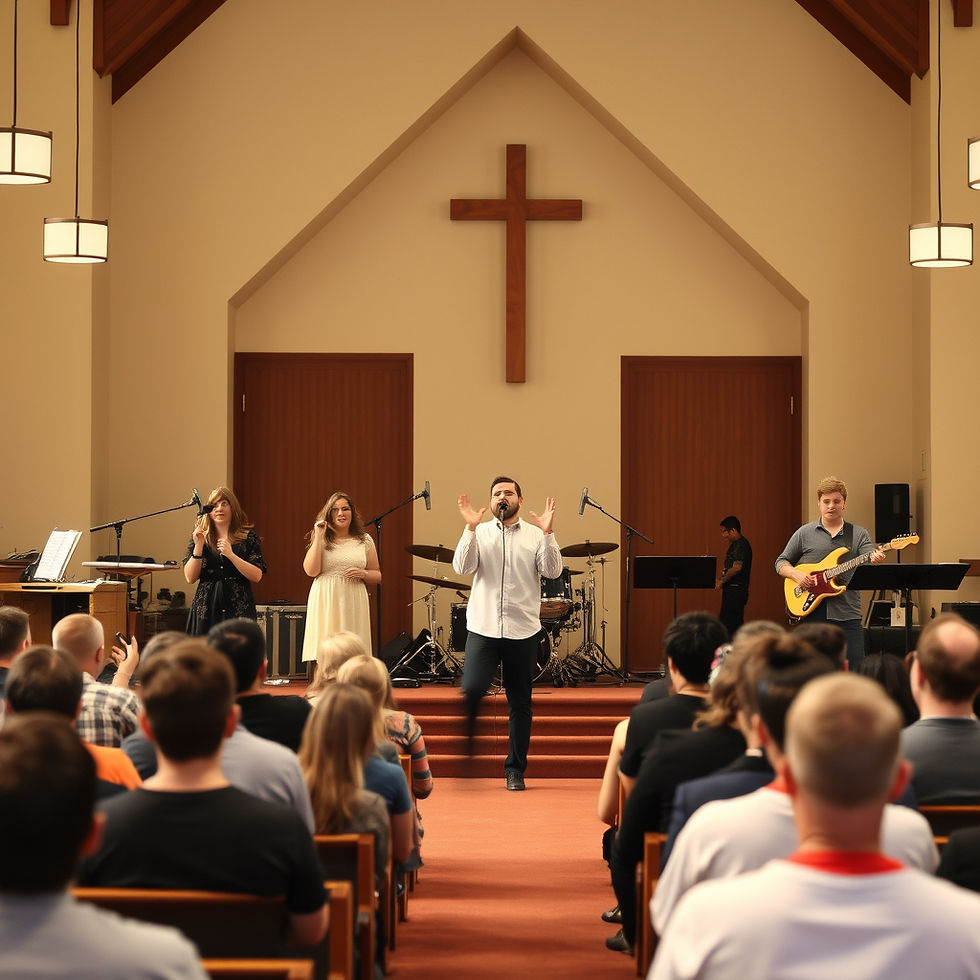
We know something about this "sacred disruption" here at First Church. On the first Sunday of every month, when we open up our Prayground, our sanctuary transforms. We hear the clatter of blocks, the chatter of little voices, and the sound of feet running up and down the aisles.
To a "serious" disciple, that might sound like a distraction. But we are learning that this "chaos" is actually hope in action. In a faith formation course I recently completed, I was reminded that children are not the "next - generation" of disciples - they are disciples NOW.
Elizabeth Caldwell writes that children are active, essential participants in a shared Christian way of life. Their presence is reciprocal; their curiosity serves to spiritually form the adults. When a child asks a profound, "wondering" question about a marginalized character in a text, they are exercising that irascible appetite - stretching our souls to see the truth we have grown too "adult" to notice. Their presence is necessary to empower us to connect ancient stories with our contemporary world.
If we truly believe that these young ones are disciples now, how might that change the way we look at one another - and the way we look at ourselves?
And sometimes - as you’ve seen many times right down there - they connect things in a way that are the equivalent of a theological mic drop and make those of us who deliver the children’s message feel like we can immediately just pack up and go home!
IV. The Gospel in Motion: Honored Guests and Mutual Blessings
This theological grounding - that hope is a "stretching out" toward justice - fuels everything we do at First Church. Our ministries are the "virtuous action" that Aquinas spoke of.
Take, for instance, our Bird City Bike Coop. In the beginning, I’ll be honest, I thought the idea was a little bird - brained! But I did not yet understand that this ministry draws its power from the irascible hope of the Gospel. It fights for the mobility and dignity of our neighbors and friends, providing them with a vital service that has the potential to change lives. Roll on, Stu and team! You are God’s love on wheels.
And we see the same hope in action with the space we provide to community organizations who are struggling with their own marginalization, the life - giving food and self - care items we provide to our own unhoused neighbors here in Phoenix, and when we use our prophetic voices to collectively confront injustice at the border, at the statehouse, and on the streets.
I have seen this same power at work in my current residency work. I am now doing my clinical pastoral education at the Cathedral of Hope in Dallas. There, I serve in a program called BACH - Breakfast at Cathedral of Hope. We treat our unhoused and food - insecure visitors as honored guests, serving them restaurant - style. We look them in the eye. We recognize their humanity before we ever pour their coffee.
Last Saturday, I met a woman named Jenny. She held an advanced degree and had written her master’s thesis on housing opportunities for the unhoused. "I spent years researching this from the outside," she told me. "And now, I am living it from the 'other side.' I’m often shocked at what I see, but this is my opportunity to truly understand what I only used to know as data."
Jenny taught me that hope is not just about surviving; it is about the dignity of being a teacher even in the midst of hardship. Even in her vulnerability and marginalization, she was the expert, and I was the student. In our encounter, hope transformed the "stretching out" of my soul into a shared experience with the Living Christ. And in trying to bless another, I was richly blessed by HER story and HER wisdom. It often works that way. It is seldom ever a one - way street when we serve others and bring them hope, is it?
V. The Empire of Fear vs. The Kin - dom of God
Friends, Laetare Sunday hope is not a shield from reality; it is the energy to face it. We live in a climate where it has been made acceptable to attack the marginalized. We are witnessing a systemic attempt by the powerful to assert dominion over the bodies and lives of the vulnerable.
Consider our trans siblings. In this current legislative cycle, over 500 anti - trans bills have been introduced - nearly 40 in our own region. This is an attempt by those in power to use their pens to push the "least of these" out of public life.
We witness acts of domestic terrorism against asylum seekers and those who protest their treatment. We see the powerful - like the Romans of old - seeking to assert dominion through force. And we see the sickening assault of young women by the powerful, crimes swept under the rug by those who believe their status makes them untouchable.
Now, more than ever, we need the "fighting" hope of Aquinas. The modern "Romans" believe their dominion is absolute. But God’s power looks like a Teacher holding a wailing toddler. God’s power is the only one that truly matters.
But in a world that worships strength and dominance, do we have the courage to trust in a God whose greatest power is revealed in a vulnerable child?
What gives me hope in these times is to hear the Gospel of Jesus Christ being reclaimed by progressive Christians in the public square to counter the false narrative that Christian Nationalists own Christ. In my new home state of Texas, U.S. Senate Candidate James Talarico is wielding the Gospel as a weapon of hope, uplifting the marginalized in the ways Jesus did. Inviting ALL people to Christ’s table instead of treating it like an invitation - only dinner party for the rich and the powerful.
I wish I were as articulate as James is at bringing Jesus’ true message to life in today’s world. But the most important thing is that he is bringing a message of compassion and hope to the masses at a time when we are so hungry for it and need to hear it so badly. I can imagine his strategy comes from the old hymn “They’ll know we are Christians by Our Love”. What a contrast to today’s discourse, isn’t it?! And people are responding to it.
Conclusion: The Refuge of Radical Welcome
Church, this is our calling. To bring hope through action to the least of these like Jesus did. We are an ekklesia - "the called - out ones" who exist as a refuge for the marginalized who need it most.
Once we have welcomed the child, the unhoused, and the trans person, we are called to be their voice. Proverbs 31:8 charges us: "Speak out for those who cannot speak, for the rights of all the destitute." We speak by giving rent - free space to the silenced. We speak by voting. We speak by ensuring our "welcome" is a fierce protection of dignity for everyone who walks through those doors.
As we journey through Lent, we cannot stay in our pews. We must lean out of our seats - just as we would for that toddler in the coffee shop - but we must do it for the trans child in the state house and the asylum seeker at the bus station.
Let us abandon our comfort, our "illusion of control" and step into the holy chaos of the Kin - dom. Let us look into the faces of the vulnerable and see not a problem, but a sacred presence. Let us be a church that does not just offer "welcome," but offers a wall of protection.
May we be the hands that hold those broken hearts. May we be the voices that speak when others are silenced. May First Church continue to be a refuge of radical welcome, a workshop of justice, and a sanctuary of the only power that truly matters - the power of God’s love.
Amen.
Pastoral Prayer: The Refuge of Welcome
Holy One - Mother, Father, and Friend to us all - we come before you with hearts that are both heavy with the world's pain and hopeful for your coming Kin - dom. We thank you for the "unwritten agreement" of love that binds us together, and for the sacred disruption of children whose "wondering" questions remind us that the Kin - dom is already in our midst.
God of the Irascible Hope, give us the energy to fight for what is good. We lift up those whom the empires of this world seek to erase. We pray for our trans siblings - especially the children - whose existence is being debated in the halls of power. Surround them with your fierce protection and remind them that they are fearfully, wonderfully, and divinely made.
We pray for our neighbors who are unhoused, for those seeking refuge at our borders, and for the survivors of systemic abuse who have long been forced into silence. We thank you for the lessons taught to us by friends like Jenny in Dallas, who remind us that dignity is a truth we recognize, not a gift we give.
We turn our hearts toward the global stage, O God, and we pray for the people of Iran, for American soldiers in harm’s way, and for all who are "collateral damage" of violence. In the midst of the terrors of war, be a refuge. Move the hearts of leaders toward the way of peace.
Forgive us, O God, when we act like the "bodyguards" of the sanctuary - seeking comfort while pushing the vulnerable away. Give us the courage to abandon our "illusion of control" and to step into the holy chaos of your love. Bind us together as an ekklesia - a community called out to be a refuge of radical welcome.
And now, as one family of faith, we join our voices together to pray the words that Jesus taught us: Creator...


Comments